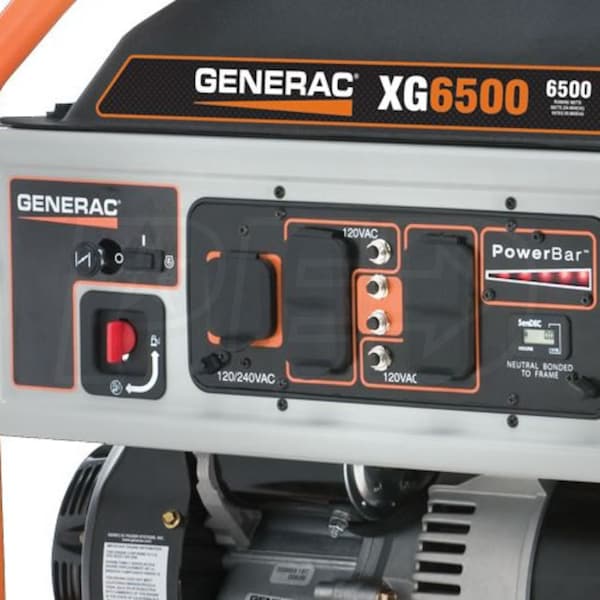
Q: Jim, I'm a licensed NH Electrician I have a Honeywell 7500Watt Portable Generator that will be used to supply selected loads in a non-separately derived residential application as outlined by the 2011 NEC. The tag on this generator indicated that the neutral is bonded to the frame. I need to know if this generator can be made into a floating neutral generator without voiding listings or warranty. If the answer is yes then where and how does the manufacture recommend the removal of the bond? And will the manufacture send a new label that indicates the generator is now a floating neutral generator. This will be an issue with any generator that has its neutral bonded to the frame portable or stationary. Any info that you can give me will be a great help.
Regards,
Ron T.
by Ron Tasker from New Hampshire on January 08, 2012
A: The manufacturer does not recommend removing the bonded neutral from the generator and neither do I and just about 97% of generators on the market have a bonded neutral.
If you need to break the neutral in the generator backup set-up then you need to go with a GFI type transfer switch such as the Reliance Controls "X" series switches.....see link for details.
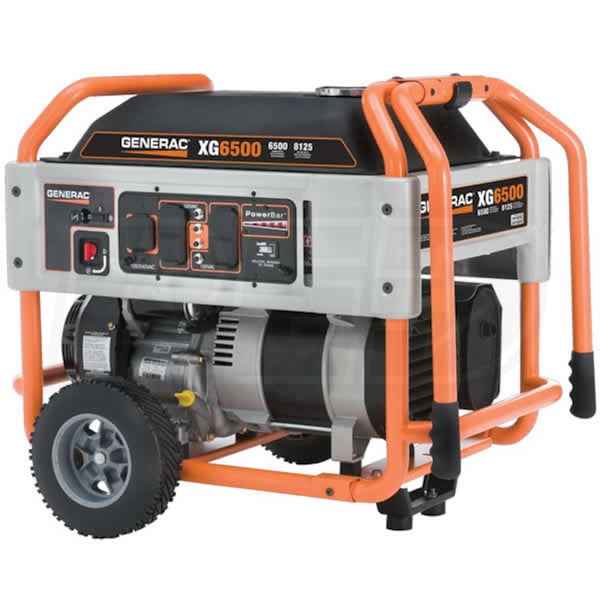
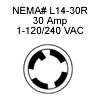
Note: Typically these switches are not required unless the large transfer switch outlet on the generator is GFI protected which is found on Professional generators such as the Generac "XP" models and not the "XG" model.
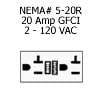
The biggest thing, is the fact that a generator has a bonded-neutral does not rule out compatibility with 2-pole transfer switches. The only time that a portable generator will not be compatible with a 2-pole transfer switch is if the generator has a bonded-neutral AND there is a GFCI breaker or GFCI mechanism protecting the receptacle they are using to connect the generator to the transfer switch.
Code does not require switching the neutral, so using a bonded generator with a Pro/Tran is perfectly fine as long as there is not a GFCI built into the receptacle that is being used. If there is a GFCI, it won't work because the breaker trips.
Any time a bonded-neutral generator is connected through a transfer switch to a house wiring system, there are two neutral-to-ground bond points: one at the main panel and one at the generator.
Having two bond points creates 'dual paths' on the ground and neutral, aka "ground loop", meaning the ground wire from the generator to the house panel will share everything with the neutral wire from the generator to the house panel.
This leads to there being a very small amount of current on the ground. If there is a GFCI breaker tied into the generator receptacle, it will sense this current on the ground and trip every time the generator is connected, even under No load.
* If the generator does not have a GFCI protecting the in-use receptacle, there will not be a trip and the generator will power circuits successfully.
A common argument against this is: "but the ground cannot have any voltage or current in any situation" - this is not true. The NEC states "the ground cannot carry 'objectionable' current".
The ground wire in question is the wire between the house panel and the generator, a small amount of power on this wire is not a safety concern in this type of application.
We have no record of a single injury, or a single inspection ever turned down, related to a bonded neutral generator connected to a home through a 2-pole transfer switch.
Note that this has been done historically for decades, using bonded generators without switching the neutral, ever since generators and transfer switches existed.
There was never a problem until about 10 years ago when generators started adding GFCI's (per OSHA job site requirements) and wiring them into the larger receptacles. GFCI's on the 15 amp 120v outlets are usually separate and not connected to the 4 wire 120/240 outlets, but it's a challenge to identify this without contacting the manufacturer. It varies greatly and is rarely specified in the owners manual.
The entire problem here is related strictly to the GFCI breakers built into bonded-neutral generators, not the fact the generator has the neutral bond alone. In knowing this, if we look at all of the portable generators that are bonded neutral, and then if we separate the models WITH a GFCI breaker protecting the 120/240 outlet, the percentage of these generators is extremely small. These are the only generators that will ultimately require a 3-pole transfer switch that breaks the neutral.
Breaking the neutral simply eliminates the ground loop (dual paths) between the generator and house panel created by having two bond points, and will eliminate the problem of the GFCI breaker tripping.
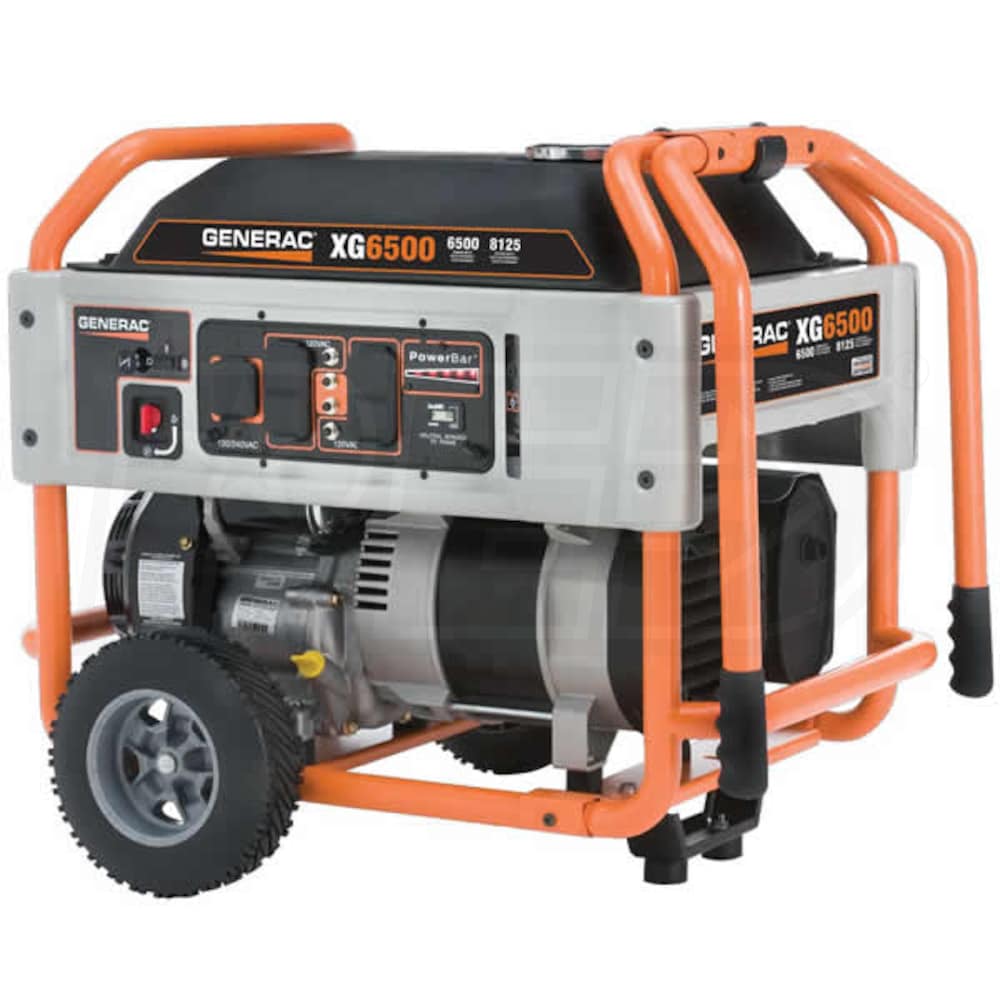
I recently bought a Generac XG6500(model- 5796). Filled up the oil and added about 2 gallons of gas to test it out. Took many pulls to get it started. When started, it ran fine. I put a load on it and ran it for about 15 minutes. I was happy with it. I let it cool down, then put it back in the garage. After a few hours, I noticed a strong gasoline smell from the garage coming into the house(garage is attached). I checked it out- no leaks. The smell was coming from the gas cap. Is this just a bad design, or did I get a gas cap that isn't sealing????
I took my fluid evacuator and removed all of the gasoline. I noticed a small rubber plug or part laying on the bottom of the gas tank. I'm wondering if its part of the fuel indicator float assembly, and fell off??? Anyways, I aired out the garage and the smell went away. I just called Generac and they are no help. The chic just gave me a few phone numbers of local dealers. This is my first portable generator. Wondering if the gas cap just isn't sealed like on lawnmowers, snowblowers, etc?????
EGD Responds: This generator comes with a 2 Year Warranty from Generac. We suggest taking your generator to one of your local dealers to have the gas cap/tank inspected.
I recently bought a Generac XG6500(model- 5796). Filled up the oil and added about 2 gallons of gas to test it out. Took many pulls to get it started. When started, it ran fine. I put a load on it and ran it for about 15 minutes. I was happy with it. I let it cool down, then put it back in the garage. After a few hours, I noticed a strong gasoline smell from the garage coming into the house(garage is attached). I checked it out- no leaks. The smell was coming from the gas cap. Is this just a bad design, or did I get a gas cap that isn't sealing????
I placed my order after a lot of research and thought it was going to be delivered 10-14 days. It was here within 5 days !!!
I read the manual and ran it for 30 minutes for the break in period. During this time I plugged in different electrical items to put generator under different loads. It's not a quite as I hoped for - but down at the camp sites at Texas Motor Speedway - there are hundreds of generators running and they are all loud - some more so than others.
I know my Generac will provide all the power my trailer needs and then some for any outside items we need to run!! It's easy to start and the lighted control panel is great!! I know we will get years of great service from our Generac!!!!
The only problem I have had was - I rolled the generator to the back deck - I have a Dogrun deck I have to cross - As I pulled the handles - The grips pulled off and I landed on one of the Dogs food bowl and crushed it. I got lucky I didn't break a bone. The handles NEED TO BE GLUED ON!!! Mine are now!
I placed my order after a lot of research and thought it was going to be delivered 10-14 days. It was here within 5 days !!!
I read the manual and ran it for 30 minutes for the break in period. During this time I plugged in different electrical items to put generator under different loads. It's not a quite as I hoped for - but down at the camp sites at Texas Motor Speedway - there are hundreds of generators running and they are all loud - some more so than others.
I know my Generac will provide all the power my trailer needs and then some for any outside items w... more